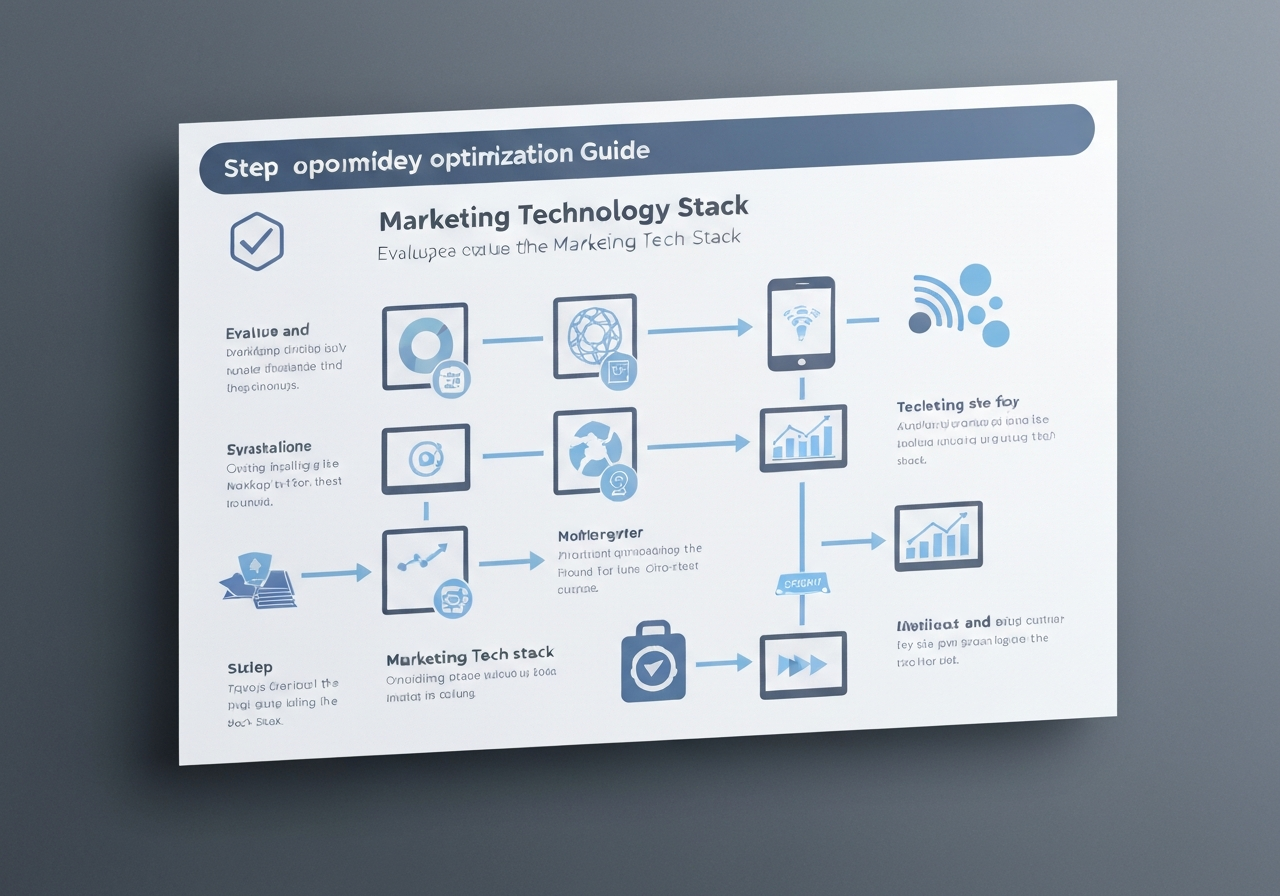
Optimizing Your Marketing Tech Stack: A Comprehensive Guide
Are you feeling swamped by the endless array of tools in your marketing technology stack? If so, you're not alone. Businesses everywhere are trying to make sense of the myriad apps and software needed to run effective marketing campaigns. But it doesn’t have to be overwhelming. This marketing technology stack optimization guide is here to help you simplify things. By following these steps, you’ll streamline your tech setup and see real boosts in productivity. Ready to take control? Let’s get started.
Understanding Your Current Marketing Technology Landscape
To embark on the journey of optimizing your marketing technology stack, it's crucial to start with a thorough understanding of what you currently have in place. This foundational step involves inventorying all tools and platforms your team uses, from CRM systems to email marketing software, social media management tools, and analytics platforms. According to a survey by Chiefmartec, the average marketing department uses over 50 different tools, which underscores the complexity of managing a modern marketing technology stack. Begin by listing every piece of software and tool that touches any aspect of your marketing operations. It’s important to include not just the big, well-known platforms but also the smaller, specialized tools that might be used only by certain teams or for specific projects. For instance, if your content team uses a dedicated SEO tool or your customer service team utilizes a chatbot platform, these should all be accounted for. Next, assess how these tools integrate with each other. Smooth integration is key to efficient workflow and data flow. Look into whether your current tools offer native integrations or if they require third-party middleware like Zapier or Workato to connect. For example, your CRM system should ideally sync directly with your marketing automation platform to provide real-time insights into customer behavior and campaign performance. Understanding the capabilities and limitations of your current landscape is essential before moving forward with any optimization efforts. This analysis will help identify redundancies, inefficiencies, and gaps in functionality. Perhaps you have two tools performing similar functions, or maybe there’s a critical process that lacks the right tool altogether. These insights are vital as you move towards refining your marketing technology stack optimization guide. Moreover, consider the user adoption rates of the tools within your organization. Just because a tool exists doesn’t mean it’s being used effectively or at all. Conduct surveys or interviews with team members to gauge their satisfaction and effectiveness with the current tools. This qualitative feedback can highlight issues that aren’t immediately apparent through technical assessments alone. By meticulously reviewing your existing marketing technology landscape, you lay the groundwork for informed decision-making as you proceed with optimizing your stack. This initial phase of assessment is not only about identifying what you have but also understanding how it impacts your team’s productivity and the overall success of your marketing efforts.
Benefits of Optimizing Your Marketing Tech Stack
Building on this foundation, optimizing your marketing technology stack can bring about significant improvements to your business operations and bottom line. This process involves carefully selecting and integrating the right tools that enhance efficiency, streamline workflows, and improve decision-making processes. The benefits of such optimization are manifold and can lead to substantial gains in both productivity and profitability. One of the primary advantages of optimizing your marketing technology stack is the reduction in operational costs. According to a report by the CMO Council, companies that have optimized their tech stacks experience a 30% reduction in cost per customer acquisition. By streamlining processes and eliminating redundancies, businesses can save on software licenses, maintenance, and support fees. For example, integrating a single CRM system that smoothly connects with email marketing and social media tools can eliminate the need for multiple standalone solutions, reducing overall expenses. Moreover, an optimized marketing technology stack enhances collaboration among teams. When all departments use compatible tools that share data effectively, it leads to a more cohesive work environment. This teamwork is critical in marketing, where insights from sales, customer service, and product development can inform strategies. Tools like HubSpot or Marketo provide platforms where different teams can collaborate efficiently, ensuring that everyone is aligned and working towards common goals. Another key benefit is the improvement in data accuracy and accessibility. In today's data-driven world, having timely and accurate information is crucial for making informed decisions. An optimized tech stack ensures that data flows smoothly across various applications, reducing the risk of silos and inaccuracies. With tools like Google Analytics and Salesforce, businesses can track user behavior and preferences in real-time, allowing them to tailor marketing efforts more precisely and effectively. Finally, an optimized marketing technology stack can significantly boost the effectiveness of marketing campaigns. By using analytics and automation tools, marketers can personalize their outreach, target the right audience at the right time, and measure the impact of their efforts accurately. This not only increases the ROI but also improves customer satisfaction. According to a study by McKinsey & Company, companies that excel in personalization see an average increase of 15-20% in sales. In summary, the benefits of optimizing your marketing technology stack are profound, touching everything from cost savings to improved data management and campaign effectiveness. As businesses continue to evolve in a digital landscape, the importance of a well-optimized tech stack cannot be overstated. Implementing these strategies as part of your marketing technology stack optimization guide can set your company on a path to greater success and innovation.
Steps to Evaluate and Streamline Your Tech Stack
Moreover, in today’s digital landscape, marketers often find themselves navigating through a complex web of tools and technologies, each promising to streamline processes and enhance performance. The marketing technology stack optimization guide offers a roadmap to navigate this complexity effectively. Here are the critical steps to evaluate and streamline your tech stack: First, conduct a thorough inventory of all the tools currently in use within your organization. This step is foundational, as it provides a clear picture of what you have and how these tools interact. For example, if your team uses multiple CRM systems, it might indicate redundancy or inefficiency. According to a study by Chief Martec, the average marketing department uses over 12 different marketing technologies, which can lead to data silos and operational inefficiencies. Next, assess the functionality and integration capabilities of each tool. It's essential to identify gaps where existing solutions fall short and determine whether these can be addressed by improving existing integrations or by adopting new, more efficient tools. For instance, if your email marketing software doesn’t smoothly integrate with your customer data platform, you may miss out on valuable insights and automated workflows that could enhance campaign effectiveness. Another crucial step involves analyzing the ROI of each tool. Not all technologies contribute equally to business outcomes, and some may be underutilized or outdated. Tools that once provided significant value might now be less relevant due to changes in market conditions or technological advancements. By using metrics such as engagement rates, conversion rates, and cost per acquisition, you can make informed decisions about which tools to retain, replace, or retire. Moreover, consider the user experience and training requirements associated with each tool. High-quality tools should not only deliver on their promises but also be intuitive enough to minimize training costs and reduce the learning curve. An overly complex interface can demotivate users and hinder productivity. Therefore, when evaluating your tech stack, pay attention to the ease of use and the availability of support resources. Finally, keep abreast of emerging trends and innovations in marketing technology. The field is constantly evolving, and staying informed can help you anticipate future needs and adapt your tech stack accordingly. Regularly revisiting your evaluation criteria ensures that your marketing technology stack remains optimized for both current and upcoming challenges. By following these steps, you can transform your marketing technology stack from a cumbersome collection of tools into a streamlined, effective system that supports your overall business strategy. The marketing technology stack optimization guide is not just about cutting down on the number of tools but ensuring that each tool you use contributes meaningfully to achieving your marketing goals.
Choosing the Right Tools for Your Marketing Tech Stack
Expanding on these concepts, in the ever-evolving landscape of digital marketing, choosing the right tools for your marketing technology stack is critical to achieving your goals efficiently and effectively. The marketing technology stack optimization guide underscores the importance of selecting solutions that not only meet current needs but also scale with your business's growth. To start, it’s essential to identify the specific challenges or opportunities your marketing team faces. For instance, if your focus is on improving customer engagement, tools like HubSpot or Marketo can provide strong automation capabilities and detailed analytics. Understanding the functionalities and integrations of each tool is key. For example, a CRM system like Salesforce can be central to managing customer relationships, while a content management system (CMS) like WordPress might be necessary for maintaining a dynamic website. These systems should ideally integrate smoothly with each other to streamline workflows and reduce manual data entry. According to a study by Chief Martec, companies using integrated marketing technologies report a 20% increase in efficiency, highlighting the value of cohesive integration within your tech stack. Moreover, consider the scalability and flexibility of the tools you choose. As your business grows, so does the complexity of your marketing efforts. A tool that works well for a small team might struggle as you expand. For instance, Mailchimp is great for small to medium-sized businesses due to its simplicity and cost-effectiveness, but for larger organizations, a more scalable solution like Adobe Campaign might be necessary. It’s crucial to balance immediate needs with long-term strategic growth when selecting tools for your marketing technology stack optimization guide. Additionally, user-friendliness and support are paramount. Marketing teams often consist of individuals with varying levels of technical expertise. Therefore, opting for tools that offer intuitive interfaces and strong customer support can significantly enhance productivity and minimize frustration. SurveyMonkey and Typeform are examples of user-friendly survey tools that offer both simplicity and powerful data analysis features. In summary, the process of selecting the right tools for your marketing technology stack involves a careful assessment of your current and future needs, ensuring smooth integration between chosen solutions, and prioritizing user experience and support. By following these principles, you can improve your marketing technology stack to drive better results and foster sustainable growth.
Implementing Changes to Improve Your Marketing Tech Stack
Moreover, implementing changes to your marketing technology stack can seem daunting, but with a systematic approach, it becomes a manageable process that can significantly enhance your marketing effectiveness. This section of our marketing technology stack optimization guide offers practical steps and considerations to help you navigate this transformation successfully. First, prioritize the integration of your existing tools. According to a survey by Chief Martec, companies using 6 or more tools report higher integration challenges. Tools like Zapier or Workato can automate the connection between disparate systems, ensuring data flows smoothly from one application to another. This not only reduces manual labor but also minimizes errors and keeps all stakeholders informed in real-time. Next, consider adopting a single vendor solution if possible. Many platforms today offer comprehensive suites that cover various aspects of digital marketing. For instance, Salesforce Marketing Cloud integrates email marketing, social media management, mobile messaging, and analytics into a cohesive system. By centralizing your operations within a single ecosystem, you reduce the complexity of managing multiple vendors and interfaces, leading to more efficient processes and better alignment across different marketing activities. It’s also crucial to review and streamline your current processes before implementing new technologies. Identify bottlenecks and inefficiencies in your workflow. For example, if your team spends a lot of time manually entering data into different systems, automating this process through software like Pardot or Marketo can save considerable time and resources. Streamlining these processes not only enhances efficiency but also ensures that the new technology is used to its full potential right from the start. Moreover, ensure that your team is adequately trained on the new systems. Training is not just about understanding how to use the tool; it’s also about understanding how it fits into the broader strategy and workflow. Platforms often provide training resources, webinars, and support communities. Investing in comprehensive training can significantly increase user adoption rates and reduce the learning curve. Finally, continuously evaluate the performance of your tech stack. Set clear metrics and KPIs to measure the effectiveness of each tool and the overall stack. Regular reviews can highlight areas where further optimization is needed or where newer technologies might provide additional benefits. Tools like Google Analytics can provide valuable insights into user behavior and campaign effectiveness, guiding you towards data-driven decisions for future enhancements. By following these steps, you can effectively set up changes that will improve your marketing technology stack, leading to more streamlined operations, better customer engagement, and ultimately, greater success in your marketing endeavors. Remember, the key to successful marketing technology stack optimization guide lies in strategic planning, integration, and continuous improvement.
Measuring Success After Marketing Tech Stack Optimization
Building on this foundation, measuring the success of your marketing technology stack optimization is critical to understanding its impact on your business objectives. This stage involves tracking key performance indicators (KPIs) that directly correlate with the goals you set out to achieve through the marketing technology stack optimization guide. These goals might include enhancing customer engagement, improving conversion rates, or streamlining operational efficiency. One effective way to measure success is by analyzing the integration effectiveness among different tools within your tech stack. For instance, if your optimization involved integrating a CRM system with an email marketing platform, you should track metrics such as open rates, click-through rates, and conversion rates before and after the integration. A significant improvement in these metrics suggests that the integration has been successful in enhancing communication efficiency and customer interaction. Another crucial aspect is assessing the reduction in manual processes. Automation is often a primary goal in marketing technology stack optimization. By comparing the time spent on repetitive tasks before and after optimization, you can quantify the efficiency gains. For example, if your team was previously spending hours each week on manual data entry, and this process is now automated, you can measure the time saved and reallocate it to more strategic tasks. Customer satisfaction is also a vital metric to consider. Surveys and feedback forms can provide insights into whether customers perceive any changes in service quality or user experience. Improvements in Net Promoter Score (NPS) or Customer Satisfaction Score (CSAT) can indicate that your optimization efforts have positively impacted how customers interact with your brand. Furthermore, financial metrics like return on investment (ROI) and cost savings are essential indicators of success. If your optimization aimed at reducing costs through better resource allocation or decreasing expenses by eliminating redundant tools, tracking these financial outcomes will help justify the investment made in the marketing technology stack optimization guide. By carefully monitoring these KPIs, you can not only measure the immediate impact of your optimization but also predict future trends and make informed decisions about further improvements or adjustments to your tech stack. Regular review and adjustment based on these metrics ensure continuous improvement and alignment with evolving business needs.
Maintaining and Evolving Your Optimized Marketing Tech Stack
Ultimately, once you've successfully optimized your marketing technology stack according to the strategies outlined in our marketing technology stack optimization guide, the work doesn't end there. Maintaining and evolving your tech stack is crucial to staying ahead of market trends and ensuring that your marketing efforts remain efficient and effective. Here’s how to keep your optimized tech stack performing at its peak: First, regular review and assessment are essential. Schedule quarterly or biannual audits of your current tools and their performance. For instance, if you're using a CRM system, check if it's effectively managing customer relationships and if it integrates smoothly with other parts of your stack, such as email marketing platforms or analytics tools. A tool like Marketo can provide deep insights into campaign effectiveness and customer behavior, but only if it's properly integrated and updated. Second, staying informed about technological advancements and industry trends is vital. Technology evolves rapidly, and what worked last year may not be the best solution this year. For example, the rise of AI and machine learning has introduced new tools that can significantly enhance personalization and automation in marketing campaigns. Keeping abreast of these developments allows you to identify opportunities to update your stack, potentially replacing older tools with more efficient alternatives. Third, don’t underestimate the importance of user training and support. Even the most advanced tools will underperform if your team isn't trained to use them effectively. Consider investing in training sessions or workshops to ensure all team members are up-to-date with the latest features and functionalities. Tools like Hootsuite offer extensive support materials, which can help teams adapt quickly and effectively. Finally, consider the scalability of your tech stack. As your business grows, so too will your marketing needs. Ensure that your chosen tools can scale alongside your company without becoming cumbersome or inefficient. Salesforce is a prime example; while it starts off as a simple CRM, it scales with your business through modules and integrations that can grow with your company's expanding needs. By regularly reviewing your tools, staying informed about technological advancements, providing adequate training, and ensuring scalability, you can maintain an optimized marketing technology stack that supports your business growth and keeps your marketing efforts cutting-edge. This ongoing process of maintenance and evolution ensures that your marketing technology stack remains a strong asset rather than a liability.
How much does marketing technology stack optimization guide cost?
The cost of marketing technology stack optimization guide varies depending on your specific needs, scope, and provider. Basic options typically start at a lower price point, while comprehensive solutions may require a larger investment. Contact a professional for a customized quote based on your requirements.
How long does it take to see results from marketing technology stack optimization guide?
Results from marketing technology stack optimization guide typically begin to show within 3-6 months, though this varies based on your starting point, competition, and consistency of implementation. Some quick wins may be visible sooner, while long-term success requires ongoing effort.
Conclusion
Optimizing your marketing technology stack is not just a one-time task; it's a journey towards better performance and efficiency. This marketing technology stack optimization guide shows you how understanding your current tools, choosing the right ones, and continuously measuring success can transform your marketing efforts. Remember, a streamlined tech stack can significantly enhance your business results. Keep evaluating and adjusting your tools to stay ahead.
Start by taking a close look at what you currently have and see where you can make improvements. It’s a step-by-step process that pays off in the end. As you embark on this path, keep in mind that staying agile and open to change is key to unlocking the full potential of your marketing technology stack.
Frequently Asked Questions
What is a marketing technology stack?
A marketing technology stack is the suite of software tools utilized to manage and enhance various marketing activities. This encompasses a range of applications designed to support advertising campaigns, provide analytical insights, help content creation, and streamline other essential marketing processes. Optimizing this stack ensures efficiency and effectiveness in achieving marketing goals.
How do I know if my marketing tech stack needs optimization?
Your marketing tech stack likely needs optimization if you encounter inefficiencies, such as slow workflows or duplicated efforts, indicating potential redundancies among tools. The thing is, if your existing tools fail to support new business goals or evolving marketing strategies, it's a clear sign that an update is necessary to ensure your tech stack remains aligned with your organizational objectives and operational efficiency.
What are some common challenges in optimizing a marketing tech stack?
Common challenges include resistance to change from team members who may be comfortable with existing systems, and the difficulty in selecting compatible tools that integrate smoothly. Ensuring all technologies work together efficiently requires thorough research and sometimes compromises on specific features or functionalities.
Can you provide examples of companies that successfully optimized their marketing tech stacks?
Companies like Airbnb and HubSpot have successfully optimized their marketing tech stacks. Airbnb reduced its stack from over 50 tools to around 20, focusing on essential analytics and automation tools that improve data flow and decision-making. HubSpot integrated its suite of tools to create a smooth user experience for both marketers and customers, enhancing efficiency and effectiveness in marketing campaigns.